Are Fluid Art Designs Limited Edition? What to Know
· Editorial Team

Quick Summary
Fluid art designs are not limited edition by default. Whether a piece is limited depends on whether the seller states a fixed, numbered edition size, typically shown as a fraction such as 7/40. Originals are one-of-a-kind, while prints and products vary by how they are sold.
- Originals are one-of-a-kind, since each fluid pour cannot be exactly repeated.
- Check for a fraction such as 7/40 showing the piece number over the total run.
- A signature alone does not make a print limited; the edition size does.
- Ask whether the design will be reprinted or restocked after the run sells out.
- A certificate should name the artist, title, edition size, and piece number.
Table of Contents
- What Limited Edition Means for Fluid Art Designs
- How Fluid Art Products Are Made and Why Each Piece Varies
- Originals, Reproductions, and Open Editions Explained
- How to Check Whether a Fluid Art Print Is Limited
- Choosing Fluid Art Products You Will Keep Wearing or Using
- Frequently Asked Questions
What Limited Edition Means for Fluid Art Designs
Last Updated: November 11, 2026
Fluid art designs are not limited edition by default. A fluid art piece is usually a one-off or a small run, and whether it carries a "limited edition" label depends on how the seller presents it. It helps to separate the original artwork from the printed or wearable products made from it.
The term "limited edition" has a specific meaning in the art world. It means a fixed number of copies are made, each is numbered, and no more will be produced once the run is complete. Many artists also sign and number each copy to show it belongs to that run.
Fluid art is different from a traditional print run. Each pour is unique, so the original canvas cannot be exactly repeated. That makes the original a true one-of-a-kind piece, while reproductions are a separate matter.
Here is a quick way to think about it:
- Original painting: One piece, no copies
- Limited edition print: A fixed, numbered run from the original
- Open edition print: Unlimited copies, with no set cap
- Product (apparel or accessories): Made in batches, often with variation
Watch out: A product labeled "limited" can still be restocked later. Check whether the seller states a fixed number of units.
How Fluid Art Products Are Made and Why Each Piece Varies
Fluid art products start with a poured painting. Artists mix acrylic paints with a pouring medium so the colors flow across a surface. Gravity and tilting help shape the final pattern.
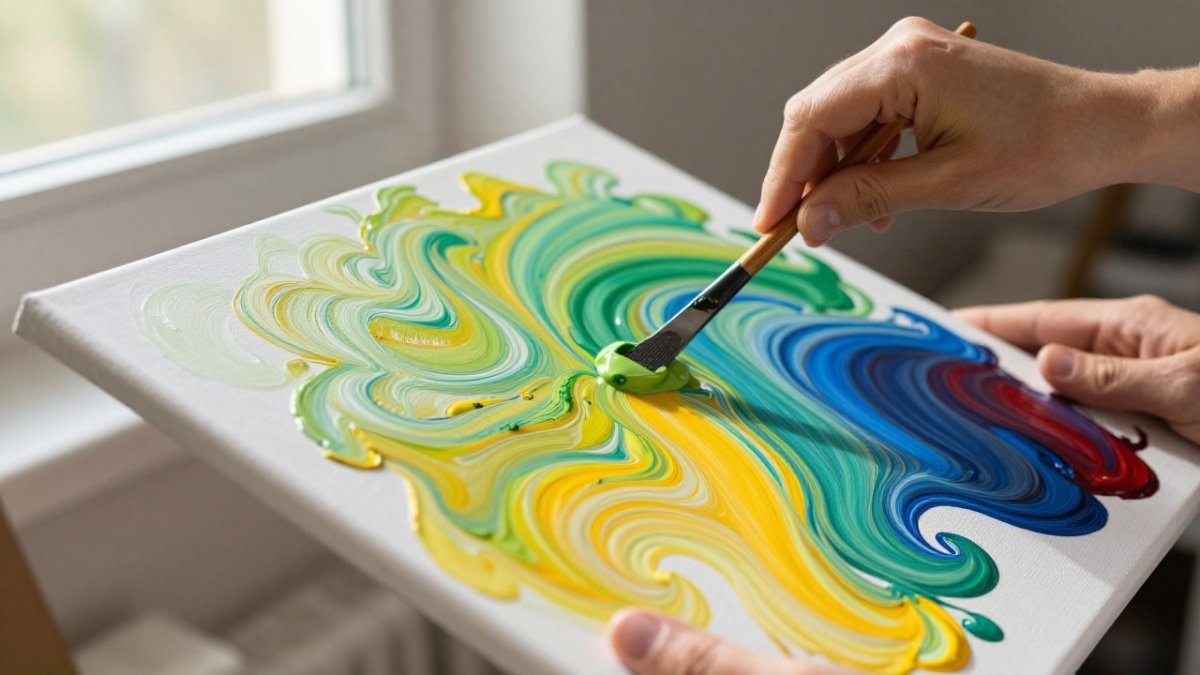
Because the paint moves freely, no two pours look the same. Small changes in temperature, paint thickness, or the angle of the canvas can shift the result. This is why the same artist can produce very different pieces from the same set of colors.
At The Phoenix and the Owl, we know that creating this art is a lot harder than it looks.
Originals, Reproductions, and Open Editions Explained
An original fluid art painting is the single physical piece made by the artist. It is worth the most because it cannot be duplicated exactly.
A reproduction is a copy of an original, usually made with a photo or scan. Reproductions are not the same as the original, and they do not carry the same value.
An open edition is a print run with no set limit. The artist can keep making copies for as long as there is demand. Open editions are common for mass-market wall art and everyday products.
Knowing which type you are buying helps set your expectations about rarity and resale value. A product can be beautiful and still not be limited.
How to Check Whether a Fluid Art Print Is Limited
The keyword asks a direct question, but most search results show products and tutorials without explaining how edition status is actually defined or verified. Here is the buyer-side checklist that fills that gap.
Start with the product description. A description that says only "limited" or "limited run" without a number is a marketing claim, not an edition.
Next, inspect the physical piece. A true limited edition print typically carries three things on the front or back: the artist's signature, a fraction showing the piece number over the total run (for example, 7/40), and sometimes a title or date. The fraction is the single most useful signal, if the denominator is missing, the run has no stated cap.
A certificate should name the artist, the title, the edition size, the specific number of the piece you are buying, the medium, and the date. It should be signed by the artist or the publisher. A certificate that repeats the word "limited" without a number does not verify anything.
For fluid art, where originals are one-of-a-kind and reproductions are common, provenance is what separates a documented limited print from an open-edition poster.
Ask the seller these questions directly:
- What is the exact edition size, and is my piece numbered within it?
- Will this exact design be reprinted or restocked after the run sells out?
- Is there a certificate of authenticity, and what does it state?
- Is the signature hand-signed or printed as part of the image?
- Can you confirm the piece is not an open edition or a print-on-demand item?
Watch out: a hand-signed signature on an open-edition print is common and does not make the print limited, the edition size, not the signature, is what defines limited status.
Finally, understand what limited-edition status does not do. It does not transfer copyright, and it does not automatically grant reproduction or commercial-use rights. A limited print is a limited number of physical copies; the artist typically retains the right to make other works, and the buyer typically receives the physical piece only.
Use this checklist to verify whether a fluid art print is genuinely limited before you buy.
| Check | What to look for | Red flag |
|---|---|---|
| Edition fraction | Piece number over total run, such as 7/40 | No denominator or total |
| Signature | Hand-signed by the artist | Signature printed in the image |
| Certificate | Names artist, title, edition size and piece number | Says "limited" with no number |
| Restocking | Seller confirms no reprint after the run sells out | Design may be reprinted |
| Print type | Not an open edition or print-on-demand item | Unlimited copies offered |
Choosing Fluid Art Products You Will Keep Wearing or Using
Once you know how to verify edition status, the next decision is whether a limited-edition fluid art product is worth owning for daily use. The trade-off is straightforward: a numbered, capped run is more collectable but usually less replaceable, while an open-edition or batch-produced item is easier to replace but carries no rarity premium.
Match the product to its wear pattern. Follow the care instructions in order to keep the prints vibrant. A decorative canvas or framed print sees less handling and holds its appearance longer, which is why limited-edition wall pieces are the more common collectable format.
Consider materials and finish.
Think about replacement risk before you commit to a limited run. If the design is capped at a small number and you plan to use the item daily, ask whether the seller offers a replacement or repair path. A limited edition that cannot be replaced is a collectable first and a user second.
For gifts, the edition question cuts both ways. A numbered piece with a certificate makes a more meaningful gift for someone who values rarity, while an open-edition or batch-produced item is the safer choice when you are unsure of the recipient's taste or when the item will be used hard. Fluid art's bright, layered patterns suit people who like color and creativity, and the practical rule is to choose the format around how the gift will be used, not around the label alone.
Watch out: a product described as "limited" can still be restocked later if the seller never stated a fixed unit count, confirm the cap in writing before you treat a purchase as collectable. If you are looking for colorful, creative gift ideas, browse our gift guide for creative women to find options that fit the person you have in mind.
Frequently Asked Questions
Are fluid art designs limited edition?
Not automatically. Fluid art is a painting technique, so a design is limited only if the artist or shop states a fixed number of copies and stops producing it. Because each pour is unique, an original painting is one of a kind, while reproductions printed on products may be open editions. Ask the seller directly whether a design has a stated edition size and whether it will be reprinted.
Can the same fluid art painting be printed on multiple products?
Yes, the same painting can be reproduced on several products such as activewear, phone cases, and mouse pads. Reproductions of one painting on different items do not change the original's uniqueness. The key question is whether the seller limits how many copies of each product are made or keeps the design available.
How can you tell if an art product is a limited edition?
Look for a stated edition size on the product page. If none is provided and the seller does not commit to a run size, treat the design as open. If none of this is provided and the seller does not commit to a run size, treat the design as open. Confirm with the seller before purchasing if the edition status matters to you.
What makes a fluid art gift feel unique?
A fluid art gift stands out because each pour produces color patterns that cannot be fully repeated by hand. Choosing a design that fits the recipient's favorite colors, and applying it to an item they use daily such as a phone case or activewear, makes the gift both personal and useful. Ask whether the design is part of a limited run if exclusivity matters to the person you are buying for.
